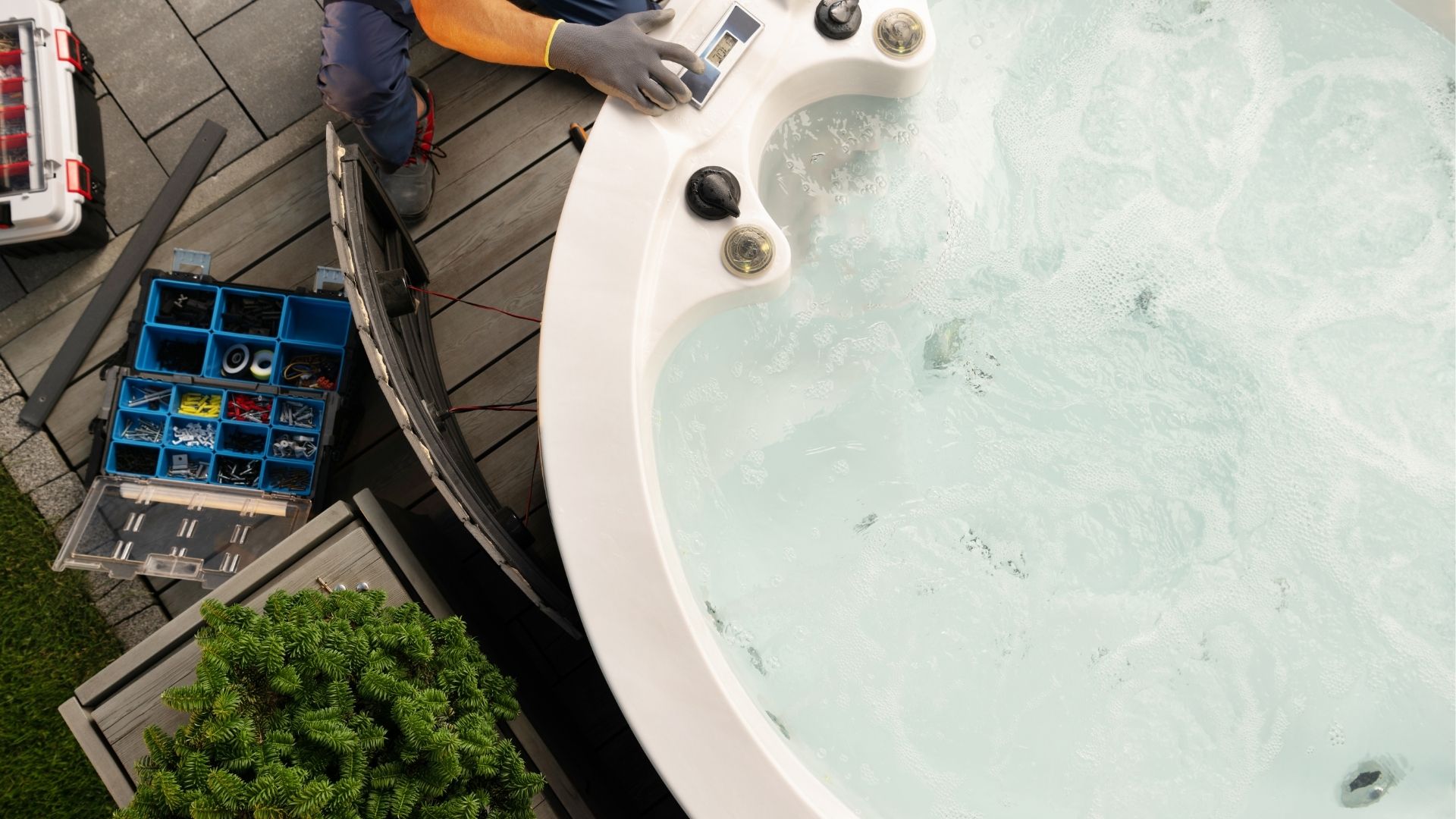
Hot Tub Leak Repair: Common Causes, What You Can Check & When to Call an Engineer
A small change in your hot tub’s water level isn’t always a sign of a leak. Water is naturally lost through evaporation and use, particularly if the spa is used regularly or the cover is left open for long periods.
With this said, if you’re topping the water up more often than usual, noticing unexplained wet patches around the hot tub or seeing water inside the equipment area, there may be a leak somewhere within the system.
Hot tub leaks can develop in several places, from relatively simple seals and connections to hidden pipework beneath the spa. Finding the source early can help prevent further water loss and reduce the risk of damage to other components.
So, how can you tell whether your hot tub is actually leaking, where are leaks most commonly found and when is it time to call a professional?
How Do You Know If Your Hot Tub Has a Leak?
The most obvious sign is a water level that continues to fall even when the hot tub isn’t being used; however, other signs can include:
- regularly having to top the hot tub up
- water collecting around the base of the spa
- damp or wet areas inside the cabinet
- moisture around pumps, unions or pipework
- reduced water pressure or jet performance
- the water level consistently dropping to the same point
- unexplained changes in how the hot tub operates
Before assuming there is a leak, consider whether the spa has recently seen heavier use than normal. People getting in and out, splashing and leaving the cover open can all reduce the water level.
If the water continues to drop while the hot tub is covered and not being used, it is worth investigating further.
Where Do Hot Tubs Commonly Leak?
A modern hot tub contains a network of pumps, pipes, jets, fittings, seals and connections. Over time, any of these can potentially develop a leak. Some of the areas we commonly investigate include:
Pump Unions and Connections
Hot tub pumps connect to the plumbing system through unions and fittings. If a seal deteriorates or a connection begins leaking, water may collect around the pump or within the equipment compartment.
A small amount of water in this area doesn’t automatically mean the pump itself needs replacing. Identifying exactly where the water is coming from is important before deciding on the appropriate repair.
Hot Tub Pumps
Pumps contain seals that can wear over time.
Signs of a possible pump-related leak can include water beneath or around the pump, unusual noises or changes in performance.
Due to the fact that pumps are electrical components as well as part of the plumbing system, suspected pump leaks are something we recommend having professionally investigated.
Jets and Jet Fittings
Each hot tub jet connects through the spa shell into the pipework behind it.
Seals and fittings around jets can deteriorate with age, movement or general wear, allowing small amounts of water to escape behind the shell.
These leaks can be particularly difficult to locate because the visible water may appear some distance away from the actual source.
Pipework and Plumbing Connections
Hot tubs contain extensive internal pipework connecting the pumps, heater, jets and filtration system. Leaks can develop from:
- split or damaged pipework
- deteriorated seals
- loose or damaged fittings
- failed glued joints
- movement within the plumbing system
- frost damage
The difficulty is that much of this pipework is hidden within the cabinet or insulation, meaning the source isn’t always immediately visible.
Heater Connections
Water can sometimes appear around the heater assembly or the connections leading to it.
Because the heater is part of both the water and electrical systems of the hot tub, leaks in this area should be professionally inspected rather than dismantled at home.
Drain Valves and Other Fittings
Sometimes the cause is relatively straightforward.
Drain valves, filter housings and other accessible fittings can occasionally develop leaks or fail to seal properly. These are often easier to identify than leaks buried deeper within the hot tub.
Can You Find a Hot Tub Leak Yourself?
There are a few simple checks you can safely make before arranging a repair.
Monitor the Water Level
Mark or photograph the current water level and check it again after the hot tub has been covered and left unused.
If the water continues to fall noticeably, there is a stronger indication that you may have a leak rather than ordinary water loss.
Look Around the Outside of the Hot Tub
Check for persistent wet patches or water collecting around the base.
Keep in mind that water can travel beneath a hot tub, so where it eventually appears isn’t necessarily where the leak originates.
Check the Accessible Equipment Area
If your hot tub has an easily removable service panel and it is safe to visually inspect the area without touching electrical components, look for obvious signs of moisture around the equipment.
Do not disconnect, dismantle or test pumps, heaters or electrical components yourself.
Check Whether the Water Stops at a Particular Level
If the spa repeatedly loses water until it reaches approximately the same point and then stops, this can sometimes provide a clue as to the area of the hot tub where the leak may be occurring.
This information can also be useful when you contact an engineer.
What Shouldn’t You Do If Your Hot Tub Is Leaking?
It can be tempting to start dismantling parts of the spa to find the source, particularly if the leak appears to be close to the equipment area.
However, a hot tub combines water and mains electricity, so there are limits to what should be investigated without the appropriate training.
Avoid opening electrical components, disconnecting pumps or heaters, altering wiring or carrying out electrical testing yourself.
If water is reaching electrical equipment or your hot tub is tripping the RCD or electrical supply, stop using it and arrange for the fault to be professionally investigated.
Can a Hot Tub Leak Be Repaired?
In many cases, yes.
The repair required depends on the source of the leak, its accessibility and the condition of the affected component. A hot tub leak repair might involve:
- replacing a worn seal
- repairing or replacing a fitting
- repairing damaged pipework
- replacing a leaking union
- repairing a pump-related fault
- addressing a leaking jet connection
- replacing another failed component
The first step is identifying where the water is actually escaping.
This is particularly important because the point where water becomes visible isn’t always the original source of the leak.
Is It Okay to Keep Using a Leaking Hot Tub?
We wouldn’t recommend ignoring persistent water loss.
Even a relatively small leak can become more problematic over time, and water escaping into the cabinet may eventually affect insulation, equipment or electrical components.
There is also the possibility that the leak will worsen.
If the water level is dropping quickly, water is reaching electrical components or the hot tub is behaving unusually, stop using it and arrange an inspection.
When Should You Call a Hot Tub Engineer?
It is worth arranging a professional hot tub leak repair if:
- the water level continues to fall without an obvious explanation
- you’re regularly topping the spa up
- the leak appears to be inside the cabinet
- water is collecting around a pump or heater
- you cannot identify where the water is coming from
- the hot tub is losing water rapidly
- the leak appears to involve hidden pipework
- electrical equipment may be getting wet
- the hot tub is also showing error codes or other faults
Providing your engineer with as much information as possible can help with diagnosis.
When contacting Spafix, let us know how quickly the water level is falling, where you’ve noticed water and whether anything else about the spa’s performance has changed.
Photos can also be useful where appropriate.
Professional Hot Tub Leak Repairs
At Spafix, our experienced engineers diagnose and repair hot tub leaks across a wide range of hot tub and swim spa brands.
Leaks can occur in pumps, unions, jets, seals, fittings and internal pipework, so our first priority is identifying the actual source before recommending the appropriate repair.
We provide professional hot tub repairs across Hampshire, West Sussex, East Sussex, Surrey and surrounding areas, including Waterlooville, Portsmouth, Southampton, Chichester, Worthing, Horsham, Guildford and many other locations across the South and South East.
If your hot tub is losing water and you’re not sure why, get in touch with our team and tell us what you’ve noticed.
Spafix Showroom
Unit B1, Hazleton Interchange
Lakesmere Road, Waterlooville
Hampshire, PO8 9JU
Contact Spafix
Phone: 023 9354 1154
Email: info@spafix.co.uk
Request a Call Back
Frequently Asked Questions
Why is the water level in my hot tub going down?
Some water loss is normal through evaporation, splashing and people getting in and out of the spa. If the water level continues dropping while the hot tub is covered and unused, however, there may be a leak.
Where is the most common place for a hot tub to leak?
Leaks can occur around pumps, unions, jets, seals, fittings, heaters and internal pipework. There isn’t one universal source, which is why correctly diagnosing the leak is important before carrying out a repair.
How quickly can a hot tub lose water from a leak?
This depends entirely on the size and location of the leak. Some leaks cause a slow, gradual reduction in water level, while a failed fitting or damaged pipe can result in much faster water loss.
Can a leaking hot tub pump be repaired?
It depends on the source of the leak and the condition of the pump. Some faults can be repaired, while others may require replacement of a seal, component or the pump itself. An engineer can inspect the pump and advise on the most appropriate option.
Can hot tub pipework be repaired?
Yes, damaged hot tub pipework can often be repaired. The complexity of the job depends on where the affected pipe is located and how easily it can be accessed.
Should I turn my hot tub off if it is leaking?
If the leak is substantial, water is reaching electrical equipment, the spa is tripping the electrics or you’re concerned about its safety, stop using the hot tub and arrange a professional inspection.
Related Hot Tub Advice
Hot Tub Repairs – Professional diagnosis and repairs for leaks, heating faults, pumps, electrical issues and more.
Hot Tub Servicing & Cleaning – Keep your hot tub clean, maintained and performing properly with regular professional servicing.
Hot Tub Repairs in Hampshire – Hot tub repair and maintenance services throughout Hampshire.
Latest Blog Posts
Hot Tub Servicing in Portsmouth: Preparing Your Spa for Autumn & Winter
3 days agoHot Tub Servicing in Portsmouth: Preparing Your Spa for Autumn & Winter As summer comes to an end, your hot tub may
Should You Service Your Hot Tub Before Autumn?
2 weeks agoShould You Service Your Hot Tub Before Autumn? As summer starts to wind down, many hot tub owners begin using their spa
Hot Tub Smells Bad? Common Causes and What to Do
3 weeks agoHot Tub Smells Bad? Common Causes and What to Do A hot tub should feel clean, fresh and relaxing. If the water starts to
Can You Make an Older Hot Tub Cheaper to Run?
1 month agoCan You Make an Older Hot Tub Cheaper to Run? If you own an older hot tub, you may have noticed that it costs more to run